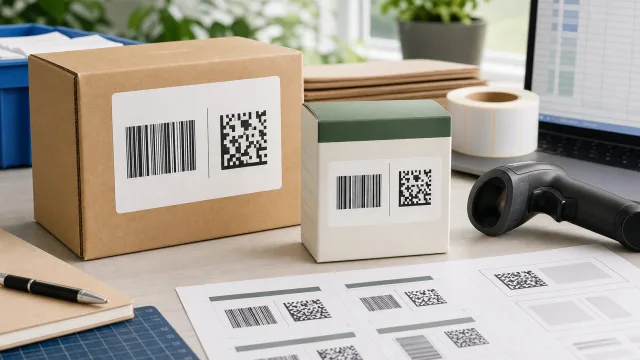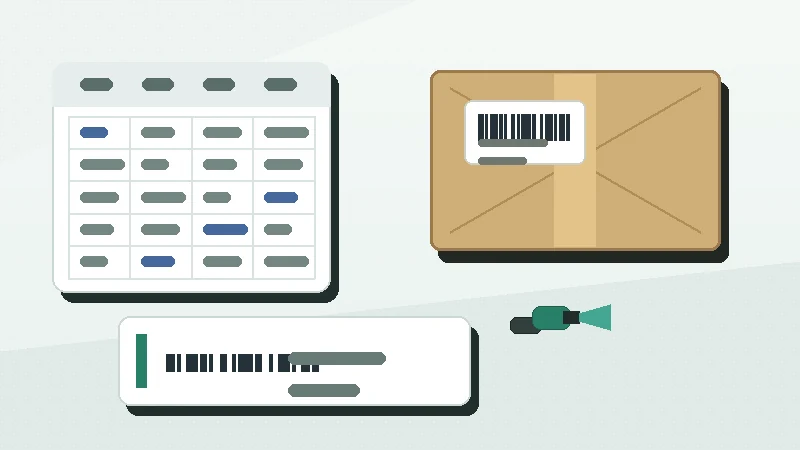

GS1 Digital Link and Sunrise 2027 can sound like every product label must change immediately. That is not the practical takeaway. As of April 29, 2026, the safer reading is that retail scanning systems are moving toward 2D capability, while existing linear barcodes and partner requirements still matter.
The short answer: learn the terms now, keep using the barcode your retail or marketplace partners require today, ask when they will accept 2D barcodes at POS, and plan packaging so a future QR Code with GS1 Digital Link or Data Matrix can fit without breaking the current scan workflow.
What Sunrise 2027 means
GS1's retail 2D implementation guideline says the initial goal is for retail point-of-sale scanning to be globally capable of reading and processing the GTIN from both existing linear and 2D barcodes by the end of 2027: GS1 2D retail POS guideline. It also says software upgrades may be needed and equipment upgrades may be required if POS scanners are not image-capable.

That is a readiness target, not a simple instruction to remove UPC or EAN symbols from every package. The same GS1 guideline says linear barcodes will coexist with 2D barcodes for as long as there are uses for them, and describes a dual-marking transition phase where products can feature both the current linear barcode and a GS1-compliant 2D barcode.
What GS1 Digital Link does
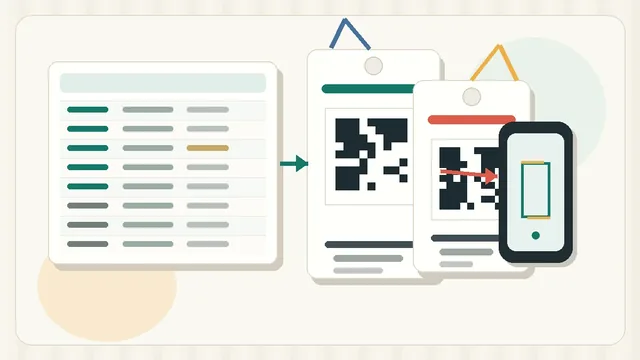
GS1 Digital Link gives GS1 identifiers a web-friendly structure. GS1 US describes it as web-enabling barcodes through a standards-based structure for encoded data in 2D line-of-sight carriers: GS1 Digital Link for brand owners. A consumer might scan a QR code and open product information, while a retailer scans the same carrier for product identity and business processes when systems support it.
This is different from printing any ordinary QR code on a package. A marketing QR code can simply link to a landing page. A GS1 Digital Link URI follows GS1 syntax and can include identifiers such as GTIN, with possible additional data depending on the use case and implementation.
1D, 2D, and dual marking
| Stage | What it can look like | Planning note |
|---|---|---|
| Today | UPC or EAN remains the required POS barcode for many retail products. | Keep meeting current partner requirements. |
| Dual marking | Linear barcode plus QR Code with GS1 Digital Link or Data Matrix. | Leave package space for both without crowding quiet zones. |
| 2D-ready POS | Retailer systems read GTIN from approved 2D carriers. | Confirm scanner, POS, and data parsing with each partner. |
| Additional data | Lot, expiry, serial, or web information may be encoded depending on use case. | Do not encode regulated or partner-required data without exact guidance. |
GS1's guideline lists QR Code with GS1 Digital Link URI syntax, Data Matrix with GS1 Digital Link URI syntax, and GS1 DataMatrix among retail POS 2D options for future-state implementations and transition periods. It also notes that not all imaging scanners will be capable of the Ambition 2027 goal, so collaboration with POS solution providers is essential.

Crawl, walk, run
Inventory your current UPC, EAN, GTIN, SKU, package artwork, scanner, and POS assumptions. Do not redesign labels blindly.
Ask retailers, distributors, POS vendors, and packaging partners what 2D carriers and data syntax they will accept.
Pilot dual-marked packaging, scan with approved systems, confirm GTIN extraction, and document artwork and print rules.
GS1 US uses a similar crawl-walk-run adoption framing on its Sunrise 2027 page and says brands can start by adding 2D barcodes to existing packaging and ensuring QR codes are updated with GS1 Digital Link standards and include the GTIN: GS1 US Sunrise 2027. Treat that as planning guidance, not a substitute for your trading partner's launch rules.
Where Label Codes-style workflows still help
Even when standards evolve, label workflow basics do not disappear. You still need exact identifiers, clean spreadsheet columns, quiet zones, readable fallback text, label stock that fits the environment, and scan tests with the real devices. A 2D barcode with poor contrast or a cropped quiet zone can fail just as surely as a bad 1D barcode.

Product label planning checklist
- doneCurrent requirementKeep the barcode your channel requires today.
- doneIdentifier sourceConfirm GTIN, SKU, lot, expiry, or serial values from the owning system.
- donePartner readinessAsk each retailer or POS provider what 2D carriers they can process.
- donePackage spaceReserve room for quiet zones and readable text during dual marking.
- donePrint validationTest artwork, stock, scanner, and data parsing before production packaging.
Do not remove a current UPC or EAN because of a headline about Sunrise 2027. GS1 guidance describes coexistence and transition. Your actual retail, marketplace, healthcare, or regulatory channel may have its own timing and requirements.
For code choices, read Code 128 vs QR Code Labels. For product-code terms, read SKU vs UPC Barcode. For retail labels, use Retail Barcode Labels and Price Tags.
List your top retail products, current GTIN and barcode carrier, package space, POS partners, and expected 2D readiness before changing any artwork.